


Guest article by British journalist Anthony Davis
Donald Trump’s latest unhinged verbal attack, this time against NATO allies, was not just another bout of rhetorical carelessness. It was a deliberate insult aimed at countries that bled alongside the United States for two decades—and it landed with particular force in the UK, where memories of Afghanistan are not abstract talking points but graves, amputations, and lifelong trauma—and where the US ‘Special Relationship’ still means something.
When Trump told Fox News that the US had “never needed” NATO and suggested that European forces stayed “a little off the front lines” in Afghanistan, he crossed a line that even normally cautious allies could not ignore. British prime minister Keir Starmer, who has spent months carefully avoiding public confrontation with Trump, called the remarks “insulting and frankly appalling.” That choice of words was unusually blunt—and telling.
Britain lost 457 service personnel in Afghanistan, its deadliest overseas conflict since the Korean War. For years, British troops led the allied campaign in Helmand province, one of the most violent and unforgiving theatres of the war. They did not hover on the sidelines. They fought house to house, patrolled some of the most dangerous terrain on earth, and paid for the alliance in blood.
So did many others. Canada lost more than 150 troops. France lost around 90. Germany, Italy, Denmark, Poland, and dozens of other NATO partners suffered casualties that, per capita, often rivaled or exceeded those of the United States. Denmark alone lost 44 soldiers—one of the highest per-capita death rates in the war. Poland, whose forces operated under constant threat, considers its sacrifice a matter of national honor. These are facts. Trump’s comments erase them.
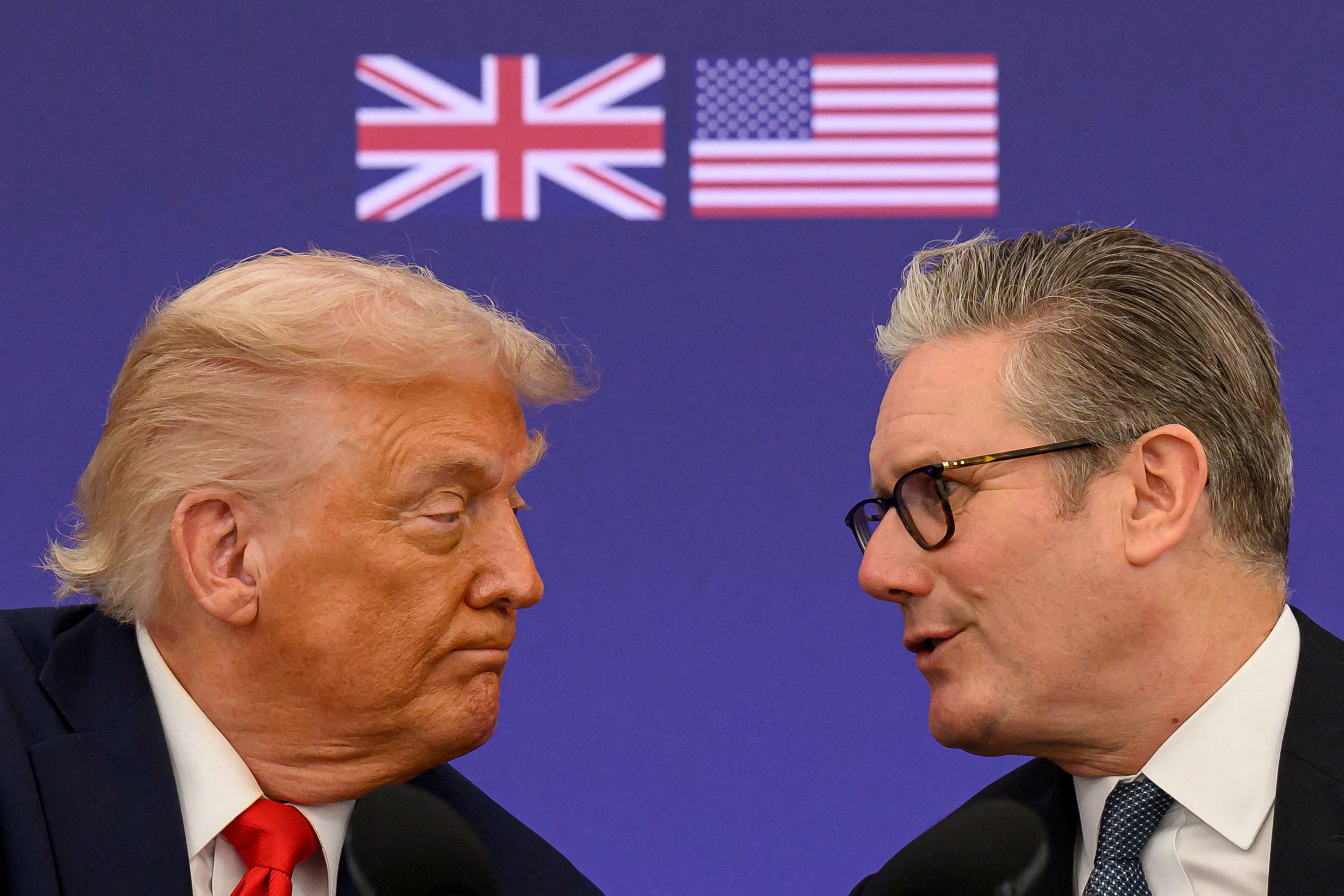
That erasure is why the reaction has been so fierce. Dutch foreign minister David van Weel dismissed Trump’s claims as false and disrespectful. A retired Polish general who commanded special forces in Afghanistan said Trump had “crossed a red line” and demanded an apology, noting bluntly that allies “paid with blood” for NATO. Britain’s veterans minister, who served multiple tours alongside US forces, called the remarks “utterly ridiculous,” reminding Americans that not everyone came home.
Even Britain’s former intelligence chief felt compelled to intervene, emphasizing the deep operational partnership between British and American intelligence officers in some of the most dangerous environments imaginable. NATO’s Article 5—the collective defense clause Trump routinely derides—has only been invoked once in history, and it was invoked for the United States after 9/11. Afghanistan was, for most of the war, a NATO mission under US leadership. Allies did not show up reluctantly; they showed up because the alliance demanded it.
What makes Trump’s comments particularly galling is the asymmetry of sacrifice they imply. Trump, who avoided military service during Vietnam through repeated deferments, now lectures veterans and grieving families about who did and did not fight. British politicians across the spectrum have pointed out the hypocrisy. It is difficult to hear a man who never served question the courage of those who did without detecting something more than ignorance. There is contempt there.
This episode did not occur in isolation. It comes amid already fraying transatlantic relations, exacerbated by Trump’s renewed fixation on acquiring Greenland and his habitual framing of alliances as protection rackets rather than partnerships. His defenders point to defense spending numbers, insisting that America “pays more.” But that is not what Trump said. He did not argue burden-sharing. He questioned bravery. And that is why the outrage has been so widespread. The UK is rightfully appalled.
Starmer’s response matters not just for what it says about Trump, but for what it signals about Britain’s tolerance for abuse. Until now, Starmer has been notably restrained, wary of provoking a volatile US president. His decision to publicly rebuke Trump—and to say plainly that he would apologize if he had spoken that way himself—suggests a line has finally been drawn.
Domestically, the move is popular. British public opinion is deeply skeptical of Trump, and many Labour MPs have been uncomfortable watching the UK bend over backwards to avoid upsetting him. Standing up to Trump costs Starmer little at home and may even strengthen his position within his party, where restlessness is growing. Internationally, the calculation is riskier. World leaders know that Trump rarely backs down and often retaliates.
But Starmer is not alone. Canada’s Mark Carney and France’s Emmanuel Macron have both used recent speeches to argue that middle-ranking democracies must begin standing together more openly as American reliability becomes less predictable. Trump’s remarks on Afghanistan only reinforce that logic. When alliances are treated as favors rather than commitments, they stop functioning as alliances.
The White House, for its part, has shown no interest in de-escalation. Asked to respond to the criticism, a spokesperson ignored the substance of the complaints and instead returned to familiar talking points about NATO spending and US power. There was no acknowledgment of the insult, no recognition of allied sacrifice, and certainly no apology.
That silence speaks volumes. Trump’s worldview leaves little room for shared sacrifice or mutual respect. In it, loyalty flows one way, gratitude is optional, and history is rewritten to flatter the speaker. The danger is not merely diplomatic. It is structural. Alliances depend on trust, memory, and the belief that sacrifices will be honored rather than dismissed.
By belittling the contributions of NATO allies in Afghanistan, Trump is not just offending foreign leaders. He is telling future partners that their losses may be denied tomorrow if it suits his narrative. And anyway, his fake ‘Board of Peace’ will attempt to supersede the U.N. and NATO too, relinquishing control of the world order to him as ‘Chairman for life’.
Starmer’s rebuke of Trump’s abuse will not fix the relationship. But it does something more important: it names the abuse for what it is and refuses to normalize it. Let other world leaders follow his example—and unite to face off tyranny.
Anthony Davis is a British journalist covering U.S. politics. Davis hosts The Weekend Show and Uncovered on the MeidasTouch Network.
Subscribe to Anthony Davis’ Substack by clicking here.

This is what happens when it takes the world too long to realize that in Trump’s eyes we’re all suckers and losers, and highly expendable.
Someone please tell me there’s a way to “fire” chump before he completely ruins our country, the futures of our children, the world as we know it. He has got to go! He sickens me.