



By Dina Doll
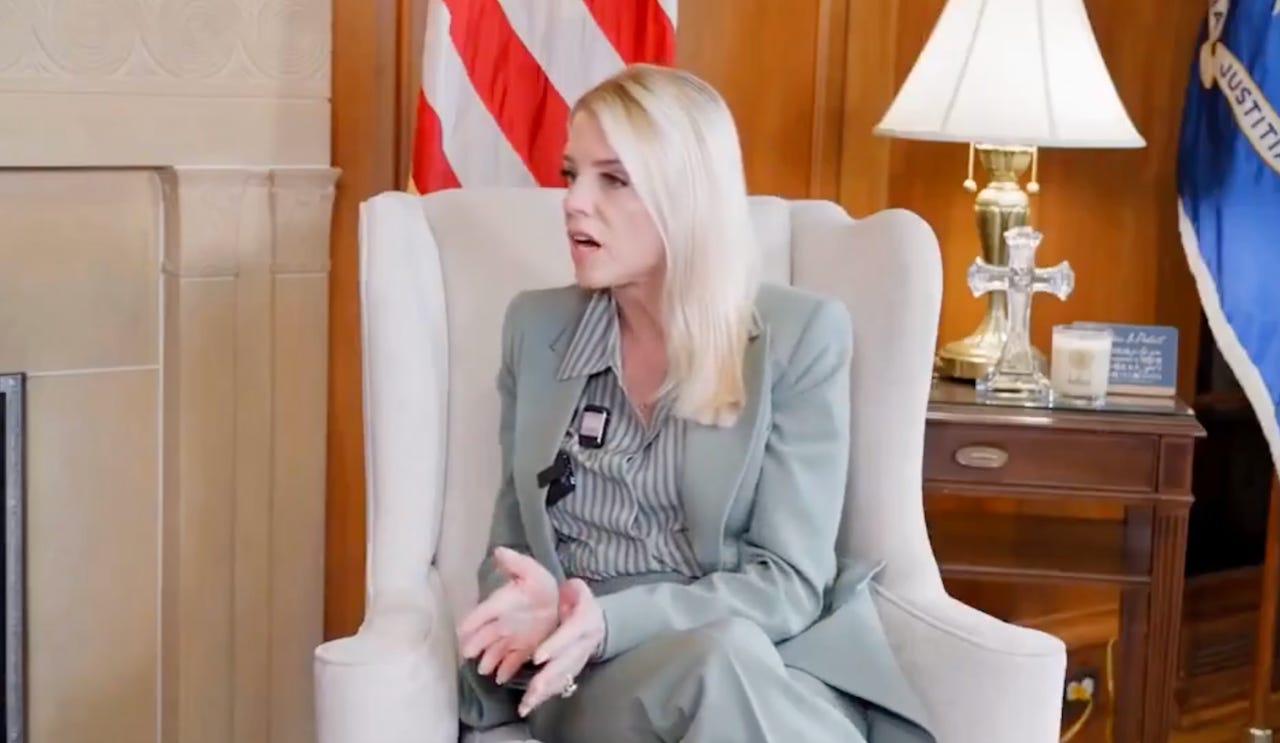
Tuesday was a troubling day for free speech in America.
In a public statement, former Florida Attorney General Pam Bondi claimed she plans to criminalize hate speech—but her legal justification relied on a statute that criminalizes incitement to violence, not hate speech. The difference is not academic—it is constitutional.
Under the First Amendment, hate speech, however vile or offensive, is protected. The U.S. Supreme Court has consistently held that the government cannot prohibit speech simply because it is hateful or discriminatory. What the Court has allowed is the regulation of speech that incites imminent lawless action, as established in the landmark case Brandenburg v. Ohio. The threshold for incitement is deliberately high—and rightly so.
Bondi, a trained attorney and a state's top legal officer, knows this. Yet by conflating hate speech with incitement, she opens the door for the selective suppression of speech—an old authoritarian playbook with new branding.
And we’re already seeing it in action. Tuesday, Donald Trump responded to a reporter’s question about Bondi’s comments by saying, “Bondi will probably go after people like you. You treat me unfairly, you have hate in your heart. ABC paid me $16 million for a form of hate speech…maybe they'll go after you.”
This response is chilling—Trump wasn't referring to threats or calls to violence. He was referring to news coverage and criticism—specifically ABC’s reporting on the E. Jean Carroll defamation verdict, which he says defamed him, a civil claim rooted in reputational harm—not criminal conduct. The network settled, reportedly for $15 million.
Perhaps more disturbing is what Trump’s words reveal about how he defines criminal speech. “Hate in your heart” is not a legal standard—it’s a feeling. A perception. Trump is not just advocating to criminalize certain types of speech; he’s suggesting the government should prosecute people based on their emotions, as he perceives them. What a snowflake — an unconstitutional snowflake.
Let’s be clear: journalism is an essential fourth branch of our democracy. I was a journalist before I became a lawyer. A journalist’s ethical responsibilities and editorial ethics aren’t just guidelines—they are what makes a reporter a reporter. Yes, journalism in this country has a complicated history. Yes, it has been shaped by wealth and power. Jeff Bezos isn’t the first oligarch to own a major paper, and he won’t be the last. Yet even at its most reckless, American journalism has also been a watchdog, a voice for the marginalized, and an indispensable check on the government.
We need independent media more than ever. I’m grateful to be a part of this MeidasTouch community. I won’t keep quiet, and I know you won’t either.
Dina Doll is an experienced attorney and legal analyst. She is a regular MeidasTouch contributor, an official legal analyst for the Law & Crime Network and has appeared on multiple media outlets including CNN, NewsNation, Access Hollywood, Spectrum News, CTV, HLN TYT, Court TV, Newsmax, KCRW “All Things Considered” and numerous podcasts.
Trump incited violence on January 6, 2021 . Why wasn’t he charged with anything? Congress was too weak and spineless to impeach. Now our country and democracy are in danger.
There are enough Trump quotes that spew hate and violence. Please get him first!