


By Justin Gill
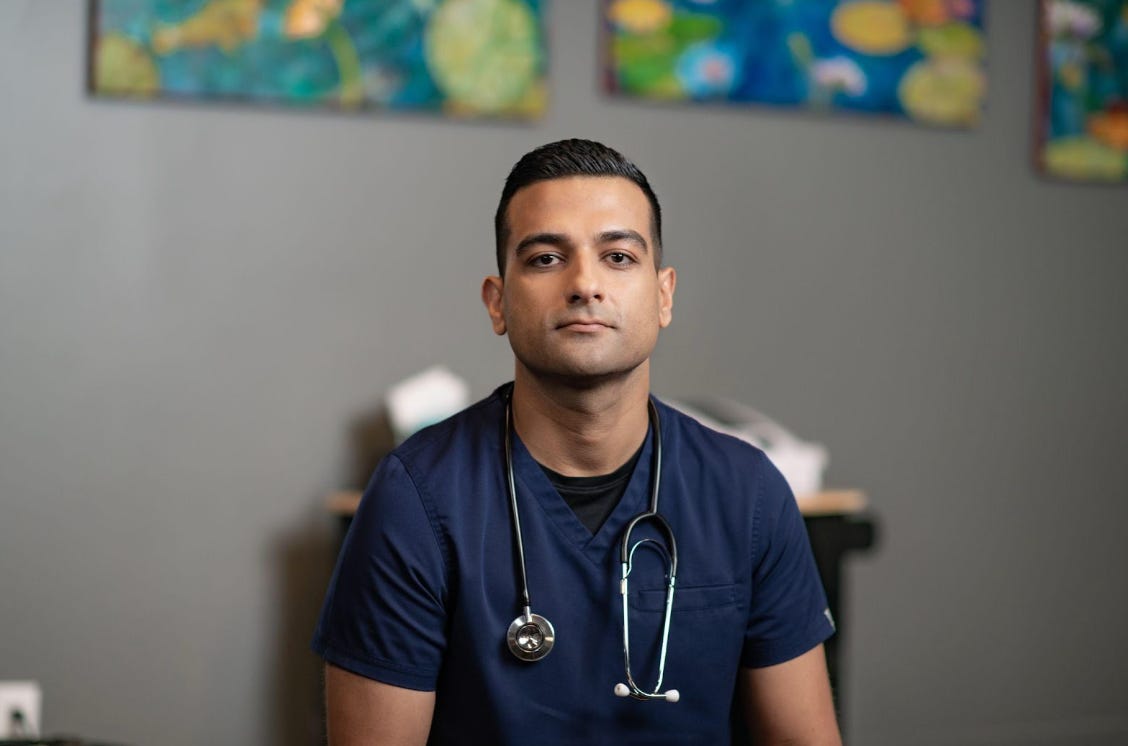
Hello, Meidas Mighty. My name is Justin Gill. I am a nurse practitioner in Seattle, Washington.
I’ll be completely honest: The news cycle has been heavy.
We have all seen the growing impact that federal enforcement actions by ICE and DHS are having on public health and the safety of our communities. But on January 24, that reality became devastatingly personal for our profession.
That day, we learned that we lost one of our own — Alex Pretti, a nurse and caregiver — in a fatal encounter with federal agents.
Across the country, nurses are expressing grief, anger, and outrage. Not because we seek conflict, but because we recognize what this moment represents: When peaceful protesters, including those who care for our communities, are met with force instead of protection, it sends a chilling message to every frontline worker trying to do the right thing.
Let me be clear: Nurses are not intimidated. And we are not deterred.
We stand up for our patients at the bedside, in clinics, in shelters, and in the streets. We will not accept injustice, fear, or silence as the new norm.
Some of you may recall my post a year ago, warning about the consequences of appointing RFK Jr. as Secretary of Health and Human Services — and how MeidasTouch helped amplify Nurses for America’s petition opposing his nomination. From sounding the alarm early on RFK Jr. ‘s policy positions, to standing shoulder-to-shoulder with leaders like Dr. Vin Gupta to promote evidence-based guidance, MeidasTouch has helped ensure that facts—not fear—reach the public.
Looking back, our warnings were not abstract. They were grounded in what nurses see every day. And now, nurses, patients, and communities are bearing the burden of policies and rhetoric that undermine science, destabilize care, and erode trust in our institutions.
The Reality on the Ground
Over the past year, the safety of our communities and our healthcare system has taken a devastating hit. Those of us on the frontlines feel it every day — at the bedside, in urgent care centers, emergency departments, and rural clinics.
Here’s what nurses and healthcare workers are facing right now:
The approach taken by this administration’s Department of Homeland Security is creating direct harm and fear in hospitals, clinics, and community spaces. This is creating a palpable effect among healthcare workers. Nurses cannot and will not take a back seat while the stability of our social systems and healthcare delivery systems are undermined by this approach.
Nearly a trillion dollars stripped from Medicaid under HR 1. The result is a destabilized healthcare system that puts our most vulnerable patients at even greater risk.
Strained resources and unsafe staffing, forcing nurses to do more with less while patient needs grow more complex.
Anti-vaccine rhetoric seeping into institutions, creating confusion, mistrust, and real harm for patients and families.
Critical health databases and clinical tools under threat, weakening the evidence-based care clinicians rely on every day.
Graduate nursing education pushed out of reach. The Department of Education’s proposed rule excluding nursing from the definition of a “professional degree” would cut off loan access for countless nurses trying to serve their communities.
These are not policy debates in Washington, D.C.
These decisions show up in exam rooms. In emergency bays. In tribal clinics. In immigrant communities. In families who delay care because they no longer know who to trust or where to turn.
And now, with the killing of Alex Pretti, we are confronted with a deeper truth: public health does not exist in a vacuum. Safety, trust, and care are inseparable. When communities fear the systems around them, health suffers. When caregivers are lost, everyone pays the price.
How We’ve Pushed Back
Here’s the part cynics don’t like to talk about: we haven’t been silent.
Across the country, nurses and our allies have stepped up:
We have seen a large pushback across the political spectrum on the killing of Alex Pretti, RN. Nurses and our allies must not sit back accept this as the norm.
We see nurses standing up across this country demanding change, fair pay, and safe workplaces.
We’ve rallied through movements like Stand Up for Science, Hands Off!, and No Kings.
Healthcare organizations have gone to court to protect essential public health resources and clinical databases.
We’ve built new ways to get evidence-based guidance directly to patients through coalitions and state alliances, even as trust in federal institutions is shaken.
We’ve forced a national conversation about what it means to exclude nurses from being recognized as “professionals” when it comes to education, loans, and workforce planning.
And now, in the wake of Alex Pretti’s death, nurses are once again demanding accountability, transparency, and truth. Not as activists first — but as clinicians who understand that trust saves lives.
Our Power, Our Responsibility
Let me say this plainly: We have power. We have agency. And we have a duty.
Nurses are the most trusted profession in America for a reason. Our communities don’t just look to us for care — they look to us for clarity.
In moments like this, we cannot stay silent. The ANA Code of Ethics is clear: Where there are human rights violations, nurses ought to and must stand up for those rights and demand accountability.(Provision 8.2)
Speaking up is not optional. It is part of the job.
What Comes Next: Ways to Take Action
Sign this petition from Nurses Shift Change demanding action on Immigration Enforcement: Nurses Call for Public Health and Human Rights Safeguards in Immigration Enforcement https://actionnetwork.org/petitions/nurses-call-for-public-health-and-human-rights-safeguards-in-immigration-enforcement?source=direct_link&
Send a message to your Congressional Representative: https://ana.quorum.us/campaign/demandtruthforalex/
Follow advocacy groups like Nurses SHIFT Changeand Nurses for America to stay engaged and activated.
Sign the petition calling on the Department of Education to revise the proposed definition of “professional degree” programs that currently excludes nursing.
On May 7, nurses and healthcare advocates from across the country will gather in Washington, D.C. for the Nurses SHIFT Change: Report for Duty Rally.
Nurses SHIFT Change is a nurse-led grassroots movement mobilizing healthcare professionals, allies, and activists nationwide. Born from the urgency of political, social, and healthcare crises, they believe the largest and most trusted profession in America must lead the call for bold, systemic change. Learn more at nurseshiftchange.org.
This isn’t about partisanship.
It’s about principle.

Our healthcare system is not a political talking point. It’s a lifeline.
When we show up together — through advocacy, peaceful protest, and collective action — we’ve seen what’s possible. Harmful policies can be challenged. Bad ideas can be beaten back. And real change can be demanded.

The frontlines of healthcare and the frontlines of democracy are closer than ever.
The question is simple: Will we stand up — or will we sit back?
If you’re Meidas Mighty, you already know the answer.
Justin Gill, DNP, APRN, FNP-C is an urgent care nurse practitioner in Everett, Washington. He serves as President of the Washington State Nurses Association and is a former Core Member of Nurses for America.
Thanks, Meidas. We need to have more of these posts from people outside our usual columns. Thank you for your support of nurses everywhere.
Thank you, Justin, for your honesty, character, and unyielding morality - in the face of all this evil