


Alright. I’ve seen enough to make a call: Voters don’t actually sort themselves into leftist or centrist categories.
Seems obvious, doesn’t it? And yet the media and the Beltway are obsessed with a story about civil war inside the Democratic Party: an insurgent left storming the gates of a moderate establishment. You can understand the appeal: it’s flashy, it’s got a villain, it writes itself. But the reality is more nuanced, and if we take the wrong lesson from it, we lose. The Democratic party has to do the important work ahead to unite if we are going to be able to win in November. The Michigan Senate primary shows the tension actually running through our primary voters’ minds: not ideology, but style and values. And resolving that tension is going to take moderates and progressives each doing something they won’t love.
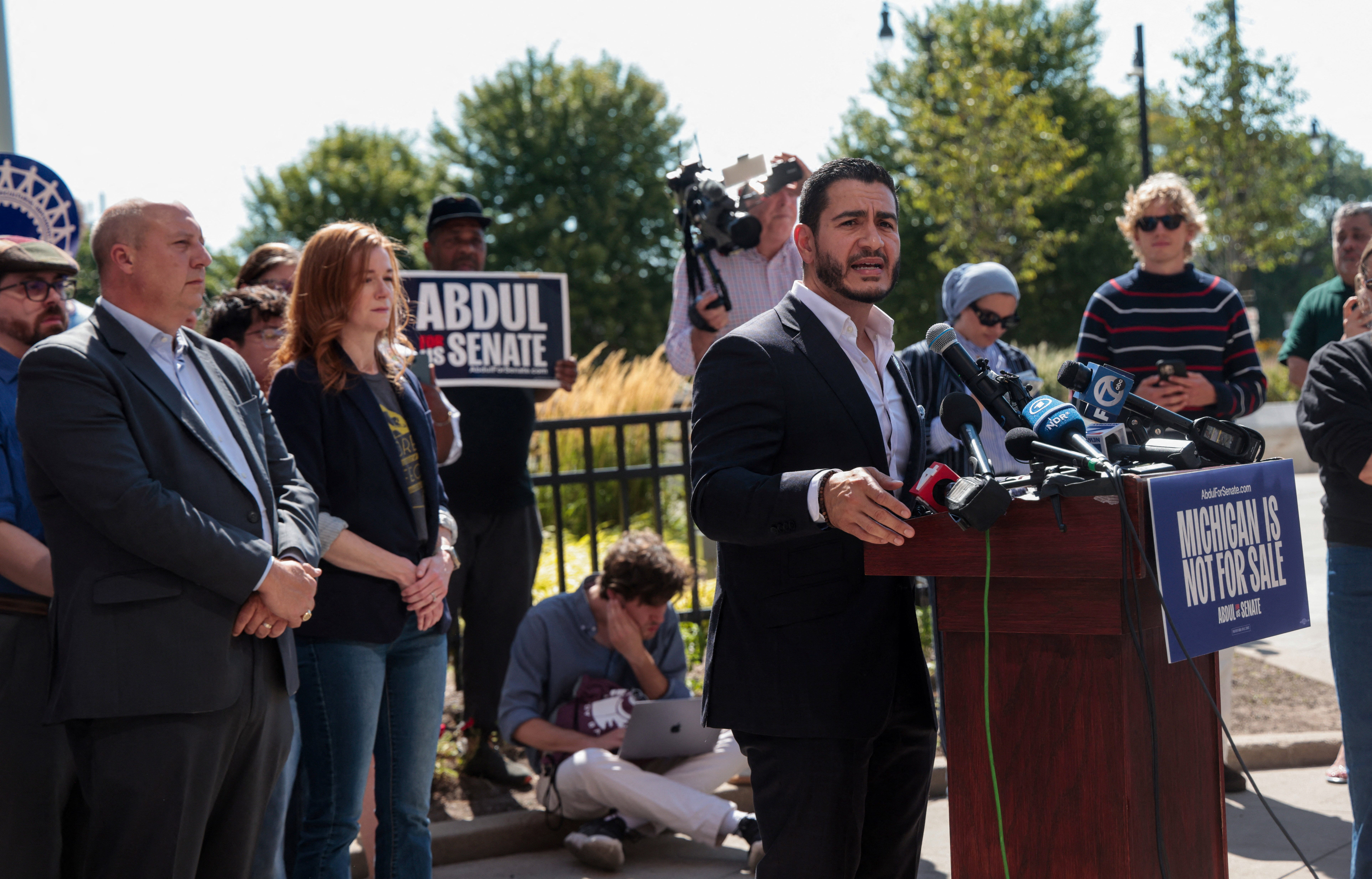
Take Michigan. Abdul El-Sayed will be the Democratic Senate nominee, having beaten the candidate the establishment preferred–though the race was much tighter than the pollsters predicted. He’ll share a ticket with the Democratic gubernatorial nominee, Secretary of State Jocelyn Benson, a two-term statewide official known for fixing broken systems, not blowing them up. By the Beltway’s own litmus test, these two aren’t from the same wing of the party. And yet here they are, leading the ticket together. That’s because the voters have watched what Donald Trump has done to Michigan and decided these two outsiders are the ones who might actually do something about it. Voters are at the point of seeing both parties as broken. Any ideological distinction between them is a non-issue outside the pundit class.
Part of the reason our party is missing this argument is that our most activist and reliable voters often live around people who look like them, sound like them, and vote like them. Places where democrats win by large margins concentrated in dense urban cores and the inner ring of suburbs around them, places with a disproportionate share of college and advanced degree holders, a group that has trended more Democratic with every cycle. When almost everyone around you already agrees with you, your politics stops getting tested. Swing voters don’t live that way. Put plainly: What plays well with our base won’t necessarily convince the people we still need to persuade.
The leftist insurgency is overstated, and reading it as a mandate for the left misses the point. Despite all the talk of a Democratic leftist insurgency, these “wins” tend to cluster in these places that are already Democratic and getting more so.
Democratic voters are telling us it’s not left or center: they want something new. Yes, left-leaning candidates in blue seats have had “wins” ousting sitting members of Congress. But the majority-making moderate candidates in red-seats who are well poised to defeat republicans in November are also political outsiders. Sam Forstag in MT-1 is a smokejumper (look it up). Rebecca Bennett in NJ-7 is a Navy helicopter pilot. Rebecca Cooke in WI-3 grew up on a dairy farm. Cait Conley in NY-17 served 16 years as a decorated Army officer. And even the candidates who are leading with past government service are coming at it from the local level.
Both wings of the Democratic Party need to take a lesson from these primaries, because we ultimately have to unite to win majorities and put this country back on track. To do this, we have to do two things:
First, moderates need to feel the anger our primary voters feel. It might be hard to accept, but voters are having trouble telling our party apart from the Republicans’. They think we’re “just as bad,” maybe even “just as extreme.” We’re in a moment where, per a recent Harris Poll, 95 percent of the country believes we’re in an affordability crisis — and we still can’t manage to put the blame squarely where it belongs, on the Republicans who control every branch of government. Our “mainstream” candidates say they feel the anger and the pain, but they say it in a white-paper-you-to-death kind of way, not in a way that shows they understand voters are hurting, and that people are furious about the corruption they see while they can’t afford groceries.
Second, progressives need to accept that some of their candidates are out past where most voters are willing to go. People won’t listen to anything we say about improving their lives if they think we don’t understand their lives. The entire Republican apparatus is going to try to paint Democrats as the party of cancelling Thanksgiving, abolishing prisons, and open borders. And it’s going to stick because it feels true — not because it is true, but because we aren’t willing to say clearly that these fringe ideas don’t reflect what most voters actually want. Most voters are appalled by anyone who talks about wiping their hands with the American flag. Socialism, the DSA, and views like these are still deeply unpopular with the broader electorate we need to actually flip seats and win a majority.
Candidate quality still matters enormously. General election voters will not vote for someone they see as too extreme and they wont vote for someone they see as too weak.
For Democrats to win in battleground seats, we have to hold two things at once: show we’re furious about the direction of the country, while also proving we understand the values of normal people. The consultants whispering in the ears of centrist and progressive candidates alike will tell you these voters don’t matter, or that you shouldn’t act for fear of “turning off” some other voter set. This is not a moment for timidity. It’s a moment for authenticity, fight, and normalcy.
The next chapter of the Democratic Party shouldn’t be written by the loudest, smallest faction. It needs to be written by candidates who can reclaim our proud tradition of economic populism focused on working people – coupled with mainstream American values.
John McCarthy is a Democratic Advisor with experience ranging from the White House, the Congress, and Presidential campaigns. Follow him on X: @JohnWMcCarthy

Excellent points, well presented! It made me think how simple things could be if we take big money out of politics and let the people choose their leaders. That is an obtainable goal if we all keep our eyes on the prize and not fall for “The democrats are in disarray” malarkey.
I agree. We need to get these Republicans out of office.