



President Donald Trump’s legal crusade against The Wall Street Journal over its explosive reporting on an alleged birthday letter to Jeffrey Epstein has come crashing down.
If you see this, that means you’ve been selected to receive 50% off an annual subscription to this Substack, this weekend only! Convert now and lock this deal in for life at this link only!
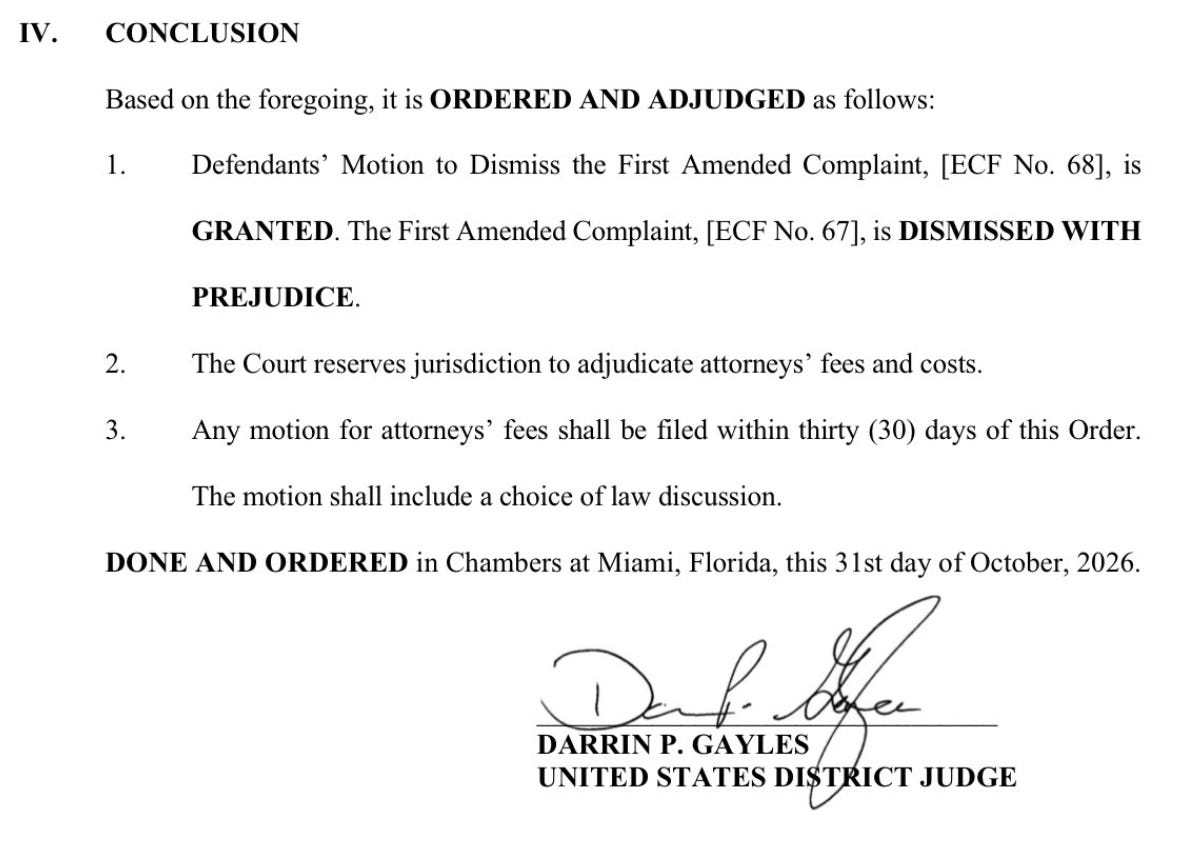
In a blistering 20-page ruling issued Saturday, U.S. District Judge Darrin P. Gayles dismissed Trump’s defamation lawsuit with prejudice, delivering a major victory for press freedom and a stinging defeat to the president, who had sued the newspaper, its journalists, and media mogul Rupert Murdoch over the Epstein reporting.
The judge didn’t mince words.
“As with his first attempt, he has failed,” Gayles wrote, referring to Trump’s repeated efforts to establish a viable defamation claim.
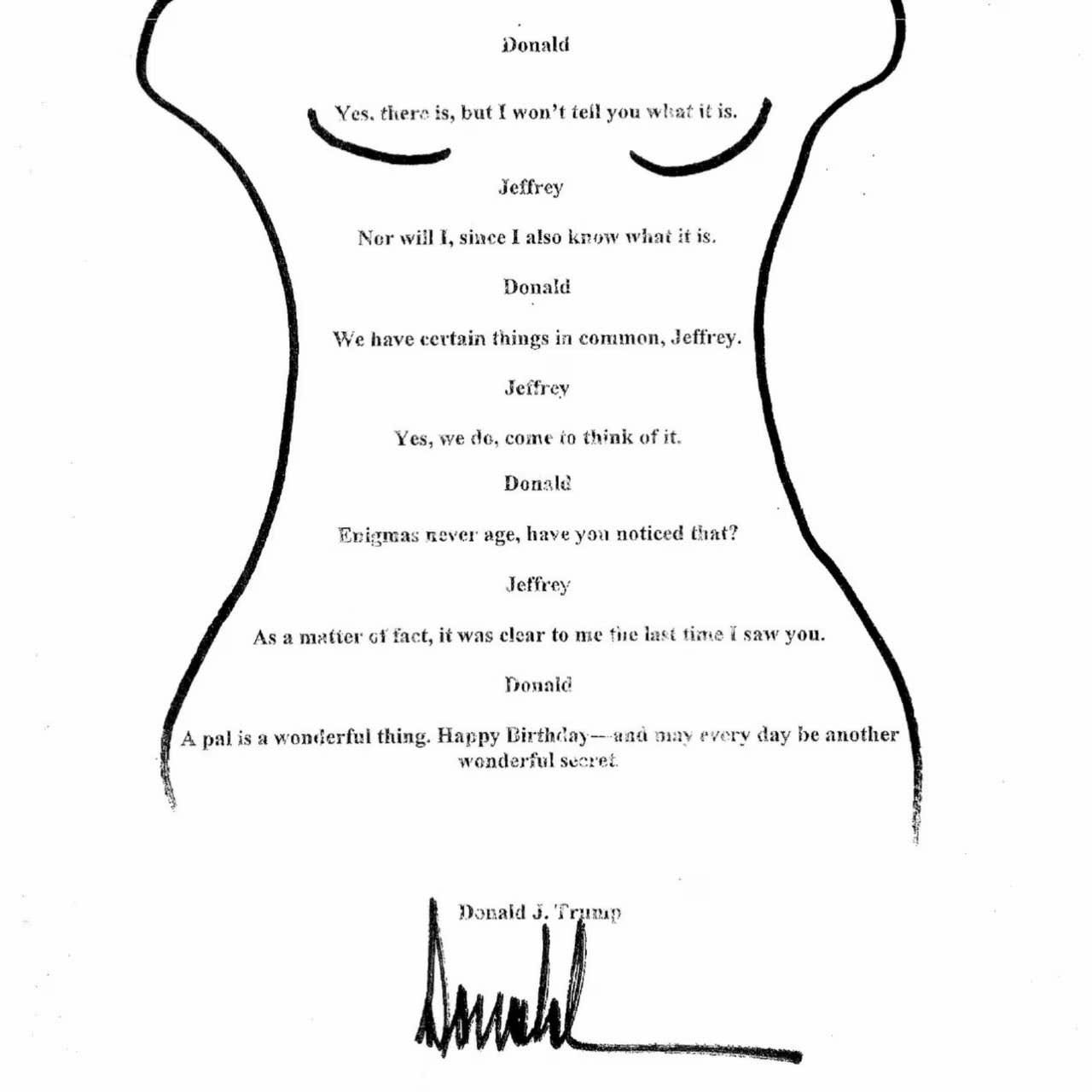
The ruling stems from the Journal’s July 2025 report describing a sexually suggestive birthday letter purportedly bearing Trump’s name, included in a 2003 album assembled for Epstein’s 50th birthday by Ghislaine Maxwell.
The letter featured a drawing of a naked woman and a typewritten exchange between Trump and Epstein, concluding with the words: “Happy Birthday—and may every day be another wonderful secret.”
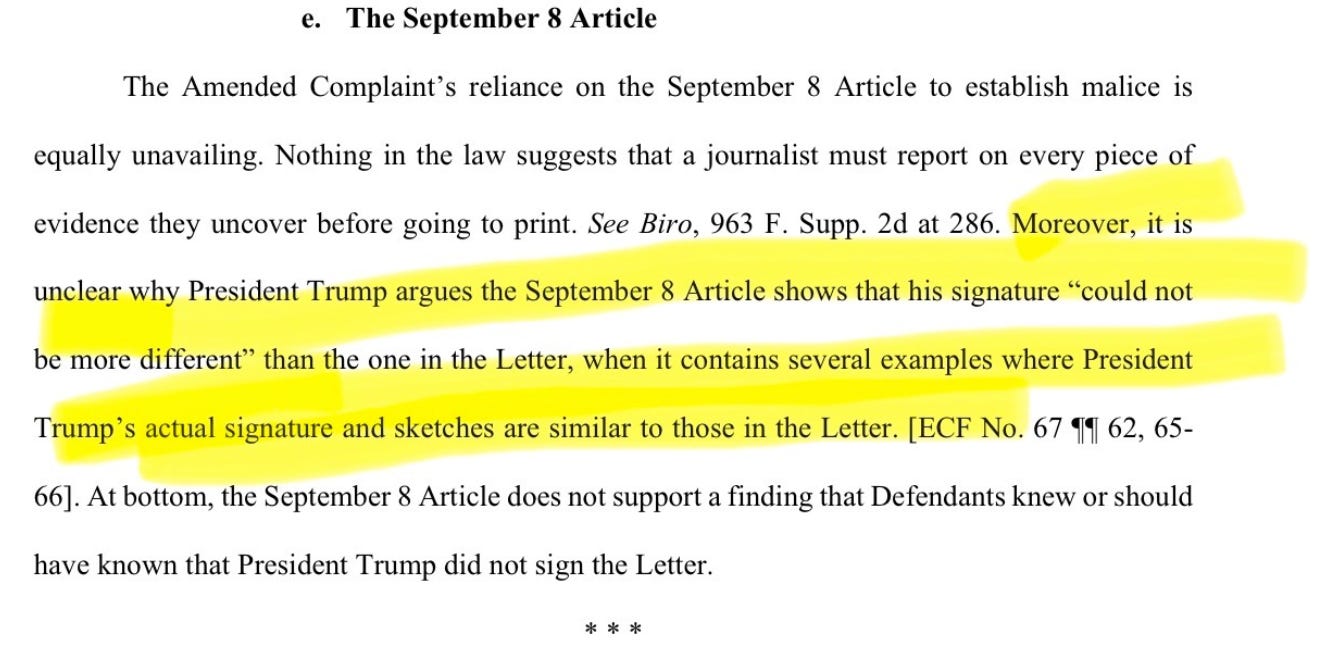
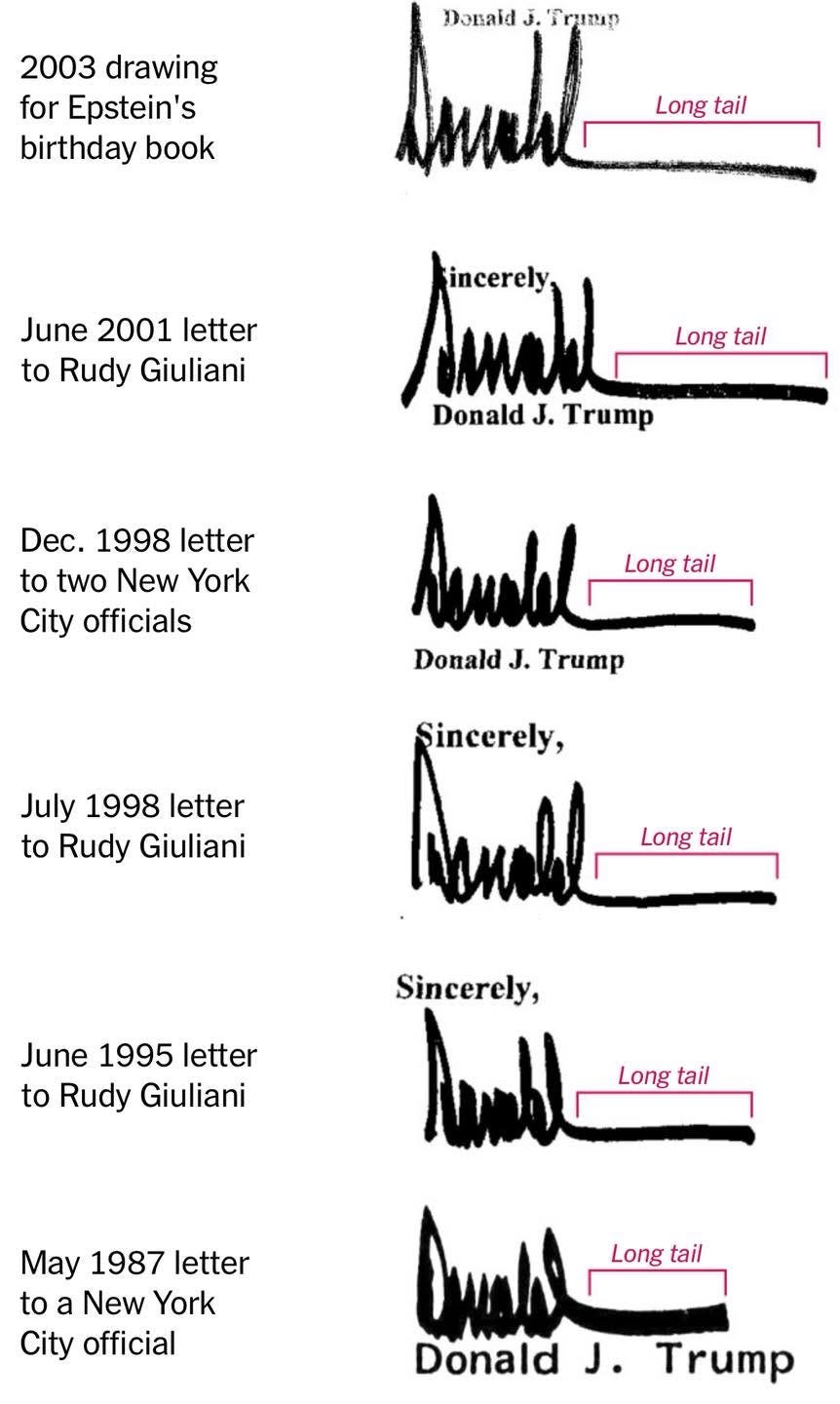
Trump has repeatedly denied writing or signing the letter, calling it a fake, and filed suit against the Journal, its parent companies, Murdoch, News Corp CEO Robert Thomson, and reporters Khadeeja Safdar and Joseph Palazzolo.
But the judge found that Trump’s legal arguments fell far short of what the First Amendment requires.
Perhaps the most remarkable portion of the ruling concerned Trump’s apparent belief that his denials alone should have prevented the newspaper from publishing its story.
“In effect, President Trump argues that once he declared the Letter a ‘fake,’ Defendants should have disregarded everything else they learned in their investigation and not published the story,” Gayles wrote.
The judge flatly rejected that position, warning that accepting it would effectively empower public figures to block unfavorable reporting simply by denying allegations against them.
The court also noted that the Journal had included Trump’s denials in its original coverage, giving readers an opportunity to evaluate the competing accounts for themselves.
And the judge wasn’t finished.
Trump had argued that the Journal’s investigation was inadequate, including because its reporters had reviewed the purported letter without obtaining a physical copy and allegedly failed to properly investigate Maxwell’s involvement.
Gayles rejected those arguments, describing the newspaper’s work as a “thoughtful and detailed investigation.”
According to the ruling, the Journal contacted Trump and his representatives, sought comment from the Justice Department and FBI, attempted to reach Maxwell, and contacted other people connected to Epstein’s birthday album.
The judge found that Trump’s allegations of an inadequate investigation were contradicted by the reporting itself.
In another striking passage, Gayles dismissed Trump’s reliance on statements Maxwell made during a subsequent Justice Department interview, in which she said she did not remember Trump submitting a birthday letter.
The judge called Trump’s references to Maxwell “a red herring,” noting that her inability to remember the letter did not establish that the journalists knowingly published false information. Her interview also occurred after the original article was published.
At the center of the case was the legal standard known as actual malice, which requires public figures bringing defamation claims to establish that a publisher knew the challenged statements were false or acted with reckless disregard for their truth.
Gayles concluded that Trump failed to plausibly allege that any of the defendants met that standard.
This was not Trump’s first opportunity to make his case. The court had already dismissed his original complaint and allowed him to file an amended version. That second attempt failed, too.
The judge therefore dismissed the lawsuit with prejudice, preventing Trump from simply filing another amended complaint in the same court. The president retains the option to appeal.
The judge expressly declined to resolve the letter’s authenticity or the truth of the Journal’s reporting, explaining that those factual questions were not necessary to dismiss the lawsuit.
But the legal consequences may not end with the dismissal.
The Journal’s defendants have also sought attorneys’ fees and costs under anti-SLAPP laws designed to protect against lawsuits targeting speech on matters of public concern.
And in a potentially costly development for Trump, Gayles wrote that the court agreed the president’s defamation claims lacked merit.
The judge stopped short of awarding fees, however, citing unresolved questions about whether Florida or New York law governs the request. The defendants have 30 days to submit a motion addressing those issues.
That leaves open the possibility that Trump could ultimately be required to pay some of the legal costs incurred by the very news organization he sued.
The timing of the ruling is especially notable as Epstein continues to loom over the political landscape and questions surrounding Trump’s past association with the disgraced financier remain a subject of intense public scrutiny.
For Trump, the lawsuit was an attempt to punish a newspaper over reporting he vehemently disputes.
For the court, the issue was whether his allegations satisfied the constitutional requirements for a defamation claim against journalists.
They did not.
And in a ruling that carries implications well beyond this particular Epstein controversy, a federal judge has reaffirmed that even the president of the United States cannot use his denial of a news report, standing alone, to shut down its publication.
The full ruling can be read here.


